# A tibble: 60 × 2
   name           number_of_cats
   <chr>          <chr>
 1 Bernice Warren 0
 2 Woodrow Stone  0
 3 Willie Bass    1
 4 Tyrone Estrada 3
 5 Alex Daniels   3
 6 Jane Bates     2
 7 Latoya Simpson 1
 8 Darin Woods    1
 9 Agnes Cobb     0
10 Tabitha Grant  0
# ℹ 50 more rowsData types
Data tidying and importing
Data Science with R
Why should you care about data types?
Example: Cat lovers
A survey asked respondents their name and number of cats. The instructions said to enter the number of cats as a numerical value.
Oh why won’t you work?!
Let’s read the docs!
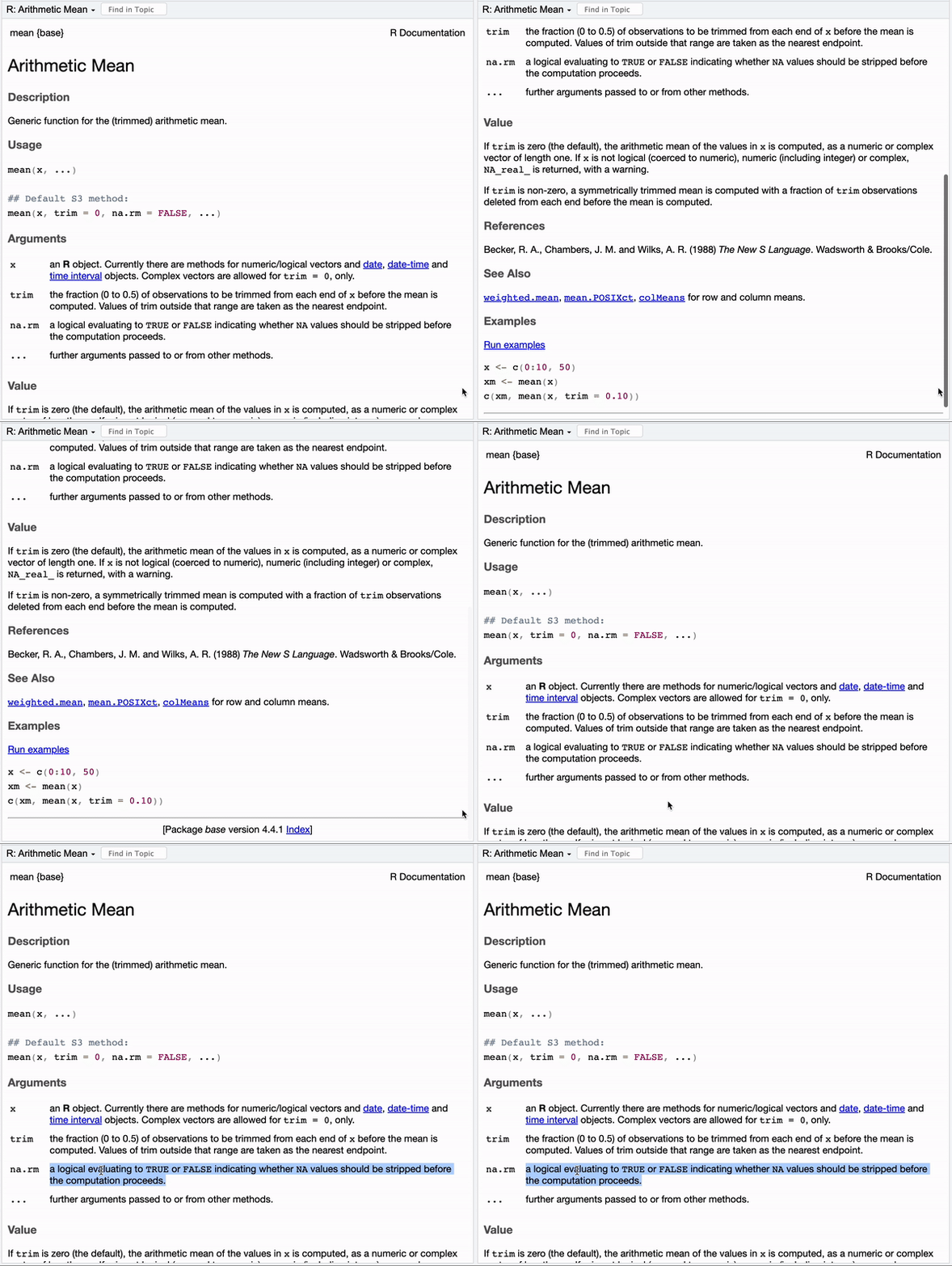
Oh why won’t you still work??!!
Warning: There was 1 warning in `summarize()`.
ℹ In argument: `mean_cats = mean(number_of_cats, na.rm =
  TRUE)`.
Caused by warning in `mean.default()`:
! argument is not numeric or logical: returning NA
# A tibble: 1 × 1
mean_cats
<dbl>
1 NATake a breath and look at your data
What is the type of the number_of_cats variable?
Let’s take another look
| name | number_of_cats |
|---|---|
| Bernice Warren | 0 |
| Woodrow Stone | 0 |
| Willie Bass | 1 |
| Tyrone Estrada | 3 |
| Alex Daniels | 3 |
| Jane Bates | 2 |
| Latoya Simpson | 1 |
| Darin Woods | 1 |
| Agnes Cobb | 0 |
| Tabitha Grant | 0 |
| Perry Cross | 0 |
| Wanda Silva | 0 |
| Alicia Sims | 1 |
| Emily Logan | 3 |
| Woodrow Elliott | 3 |
| Brent Copeland | 2 |
| Pedro Carlson | 1 |
| Patsy Luna | 1 |
| Brett Robbins | 0 |
| Oliver George | 0 |
Let’s take another look
| name | number_of_cats |
|---|---|
| Calvin Perry | 1 |
| Lora Gutierrez | 1 |
| Charlotte Sparks | 0 |
| Earl Mack | 0 |
| Leslie Wade | 4 |
| Santiago Barker | 0 |
| Jose Bell | 0 |
| Lynda Smith | 0 |
| Bradford Marshall | 0 |
| Irving Miller | 0 |
| Caroline Simpson | 0 |
| Frances Welch | 0 |
| Melba Jenkins | 0 |
| Veronica Morales | 0 |
| Juanita Cunningham | 0 |
| Maurice Howard | 0 |
| Teri Pierce | 0 |
| Phil Franklin | 0 |
| Jan Zimmerman | 0 |
| Leslie Price | 0 |
Let’s take another look
| name | number_of_cats |
|---|---|
| Bessie Patterson | 0 |
| Ethel Wolfe | 0 |
| Naomi Wright | 1 |
| Sadie Frank | 3 |
| Lonnie Cannon | 3 |
| Tony Garcia | 2 |
| Darla Newton | 1 |
| Ginger Clark | 1.5 - honestly I think one of my cats is half human |
| Lionel Campbell | 0 |
| Florence Klein | 0 |
| Harriet Leonard | 1 |
| Terrence Harrington | 0 |
| Travis Garner | 1 |
| Doug Bass | three |
| Pat Norris | 1 |
| Dawn Young | 1 |
| Shari Alvarez | 1 |
| Tamara Robinson | 0 |
| Megan Morgan | 0 |
| Kara Obrien | 2 |
Let’s take another look
| name | number_of_cats |
|---|---|
| Bessie Patterson | 0 |
| Ethel Wolfe | 0 |
| Naomi Wright | 1 |
| Sadie Frank | 3 |
| Lonnie Cannon | 3 |
| Tony Garcia | 2 |
| Darla Newton | 1 |
| Ginger Clark | 1.5 - honestly I think one of my cats is half human |
| Lionel Campbell | 0 |
| Florence Klein | 0 |
| Harriet Leonard | 1 |
| Terrence Harrington | 0 |
| Travis Garner | 1 |
| Doug Bass | three |
| Pat Norris | 1 |
| Dawn Young | 1 |
| Shari Alvarez | 1 |
| Tamara Robinson | 0 |
| Megan Morgan | 0 |
| Kara Obrien | 2 |
Let’s take another look
| name | number_of_cats |
|---|---|
| Bessie Patterson | 0 |
| Ethel Wolfe | 0 |
| Naomi Wright | 1 |
| Sadie Frank | 3 |
| Lonnie Cannon | 3 |
| Tony Garcia | 2 |
| Darla Newton | 1 |
| Ginger Clark | 1.5 - honestly I think one of my cats is half human |
| Lionel Campbell | 0 |
| Florence Klein | 0 |
| Harriet Leonard | 1 |
| Terrence Harrington | 0 |
| Travis Garner | 1 |
| Doug Bass | three |
| Pat Norris | 1 |
| Dawn Young | 1 |
| Shari Alvarez | 1 |
| Tamara Robinson | 0 |
| Megan Morgan | 0 |
| Kara Obrien | 2 |
Let’s take another look
| name | number_of_cats |
|---|---|
| Bessie Patterson | 0 |
| Ethel Wolfe | 0 |
| Naomi Wright | 1 |
| Sadie Frank | 3 |
| Lonnie Cannon | 3 |
| Tony Garcia | 2 |
| Darla Newton | 1 |
| Ginger Clark | 1.5 - honestly I think one of my cats is half human |
| Lionel Campbell | 0 |
| Florence Klein | 0 |
| Harriet Leonard | 1 |
| Terrence Harrington | 0 |
| Travis Garner | 1 |
| Doug Bass | three |
| Pat Norris | 1 |
| Dawn Young | 1 |
| Shari Alvarez | 1 |
| Tamara Robinson | 0 |
| Megan Morgan | 0 |
| Kara Obrien | 2 |
Sometimes you might need to babysit your respondents
Warning: There was 1 warning in `mutate()`.
ℹ In argument: `number_of_cats = case_when(...)`.
Caused by warning in `vec_case_when()`:
! NAs introduced by coercion
# A tibble: 1 × 1
mean_cats
<dbl>
1 0.833Always you need to respect data types
# A tibble: 1 × 1
  mean_cats
      <dbl>
1 0.833Moral of the story
- If your data does not behave how you expect it to, type coercion upon reading in the data might be the reason.
- Go in and investigate your data, apply the fix, save your data, live happily ever after.
Data types
Data types in R
- logical
- double
- integer
- character
- and some more, but we won’t be focusing on those
Logical & character
Double & integer
Concatenation
Vectors can be constructed using the c() function.
Converting between types
with intention…
Converting between types
with intention…
Converting between types
without intention…
R will happily convert between various types without complaint when different types of data are concatenated in a vector, and that’s not always a great thing!
Explicit vs. implicit coercion
Let’s give formal names to what we’ve seen so far:
Explicit coercion is when you call a function like
as.logical(),as.numeric(),as.integer(),as.double(), oras.character()Implicit coercion happens when you use a vector in a specific context that expects a certain type of vector
Special values
Special values
NA: Not available
NAs are special ❄️s
NAs are logical
R uses NA to represent missing values in its data structures.
Mental model for NAs
- Unlike
NaN,NAs are genuinely unknown values - But that doesn’t mean they can’t function in a logical way
- Let’s think about why
NAs are logical…
Mental model for NAs
NA is unknown, so it could be TRUE or FALSE
TRUE | NAgivesTRUE, because the answer is alwaysTRUEwhether the unknownNAis actuallyTRUEorFALSE
FALSE | NAgivesFALSE, because the answer changes depending whether the unknownNAis actuallyTRUEorFALSE
- This may not make sense for mathematical operations, but it does make sense in the context of missing data